
Bollards Explained: Fixed, Removable, and Crash-Rated Options
A practical guide to bollards: fixed, removable, retractable, and crash-rated types, materials and finishes, spacing, and how to choose for security or traffic control.
Bollards are short, sturdy posts that separate vehicles from people, property, and equipment. They protect storefronts, guide traffic, and shield critical infrastructure from accidental or deliberate impact. The main types are fixed (embedded) bollards, removable bollards, retractable bollards, and crash-rated security bollards, and the right choice depends on whether your priority is visual guidance, everyday protection, flexible access, or stopping a moving vehicle.
At The Grate Guys, we fabricate custom bollards and architectural metalwork for contractors, facility managers, municipalities, and industrial clients across the GTA and Ontario. This guide walks through each type, the materials and finishes we work with, sizing and spacing basics, and how to match a bollard to the job.
What Bollards Do
A bollard performs one or more of three jobs: it blocks vehicle access, it protects a fixed asset from being struck, and it directs the flow of people and traffic. A short post at a storefront keeps a car out of the glass. A row of posts at a loading dock keeps forklifts and delivery trucks from damaging a building corner or an electrical panel. A line of decorative bollards along a walkway tells drivers where the road ends and the pedestrian zone begins.
Because these jobs vary so widely, so do bollards. A lightweight visual guide and an engineered anti-ram barrier can look similar from the sidewalk but are built to completely different standards. Understanding the categories helps you specify the right one instead of over building or, worse, under protecting.
Fixed and Embedded Bollards
Fixed bollards are permanently set into the ground and are the most common type. They are typically steel pipe, filled with concrete for added mass, and either embedded directly into a footing or bolted to a surface mounted base plate. Embedded (core drilled or cast in place) bollards offer the most impact resistance because the load transfers into the surrounding concrete. Surface mounted bollards install faster and can be relocated, but they rely on anchor bolts and a smaller footprint, so they resist far less force.
- Embedded bollards: best for durable, permanent protection where the post takes real impact, such as building corners, drive throughs, and equipment yards.
- Surface mounted bollards: good for lighter duty guidance and protection on existing slabs where core drilling is impractical.
- Concrete filled steel: the standard construction for both, adding weight and stiffness to a simple pipe post.
Fixed bollards are a natural companion to other site protection work. If you are already specifying heavy-duty grates for a loading area or yard, matching the bollards to the same duty rating keeps the whole installation consistent.
Removable Bollards
Removable bollards drop into a permanently installed ground sleeve and lock in place, then lift out when you need to open the space. They suit fire lanes, service driveways, parking areas, and event spaces where you want a barrier most of the time but occasional full vehicle access. Most use a padlock or an internal locking mechanism, and the sleeve sits flush with a cap when the post is removed so it does not become a trip hazard.
The tradeoff is protection level. A removable post that a person can lift by hand cannot also resist a serious vehicle strike, so removable bollards are best understood as access control and guidance rather than security barriers. Fabrication quality matters here: a well made sleeve, a snug fit, and corrosion resistant hardware are what keep a removable bollard working smoothly for years.
Retractable Bollards
Retractable bollards lower into a below grade housing so the post sits flush with the pavement, then rise back up when needed. They are ideal where you need frequent, controlled access without any post to carry or store, such as transit plazas, restricted courtyards, and shared pedestrian and delivery zones. Retractable units come in manual (spring or counterbalance assisted) and automatic (hydraulic or electromechanical) versions.
Retractable systems are more involved to install because they require a below grade pit, drainage, and, for automatic models, power and controls. They are worth it where the access pattern is genuinely frequent. For occasional access, a removable bollard is simpler and far cheaper.
Crash-Rated and Security Bollards
Crash-rated bollards are engineered to stop a moving vehicle. They protect building entrances, crowded pedestrian areas, government and utility sites, and any location with a defined vehicle threat. This is a specialty category, and it is important to be honest about what it involves.
A bollard is only crash rated if it has been tested and certified to a recognized standard, such as the ASTM F2656 / F3016 or the older K rating system, which measure the size and speed of vehicle a barrier can arrest and how far the vehicle penetrates. That rating depends on the entire system: the post, the foundation depth and reinforcement, and how the units are spaced and anchored. You cannot make an ordinary pipe bollard crash rated by filling it with more concrete.
Crash-rated protection requires proper engineering and specification. The certified rating applies to a tested assembly installed to the tested design. If genuine anti-ram performance is the goal, the foundation and layout need to be engineered for the threat, and the certified product installed to spec. We are happy to fabricate architectural and industrial bollards and to help you understand your options, but any true crash rating must come from a tested, certified, engineered system, not a claim on a spec sheet.
Materials and Finishes
Material choice drives both durability and appearance. The common options:
- Carbon steel: strong and economical, the default for concrete filled protective bollards. Needs a protective finish to resist corrosion.
- Stainless steel: corrosion resistant and clean looking, favoured for storefronts, plazas, and architectural installations where appearance matters.
- Hot dip galvanized: steel dipped in zinc for long term corrosion protection, ideal for outdoor, coastal, and de-icing salt environments.
- Powder coat: a durable colour finish, often over galvanized steel, for both looks and added protection. Available in safety yellow, black, and custom colours.
- Bollard covers: plastic or stainless sleeves that slip over a steel post for a finished look and easy colour changes without repainting.
For exposed exterior installations in Ontario, we generally recommend galvanizing under the finish coat because road salt and freeze thaw cycles are hard on unprotected steel. Custom fabrication also lets you match bollards to other metalwork on site, from railings to custom metal grates, so the finished project reads as one coordinated system.
Typical Uses
- Storefront and building protection: keeping vehicles out of glass, entrances, and structural corners.
- Pedestrian zones: separating walkways, patios, and plazas from vehicle areas.
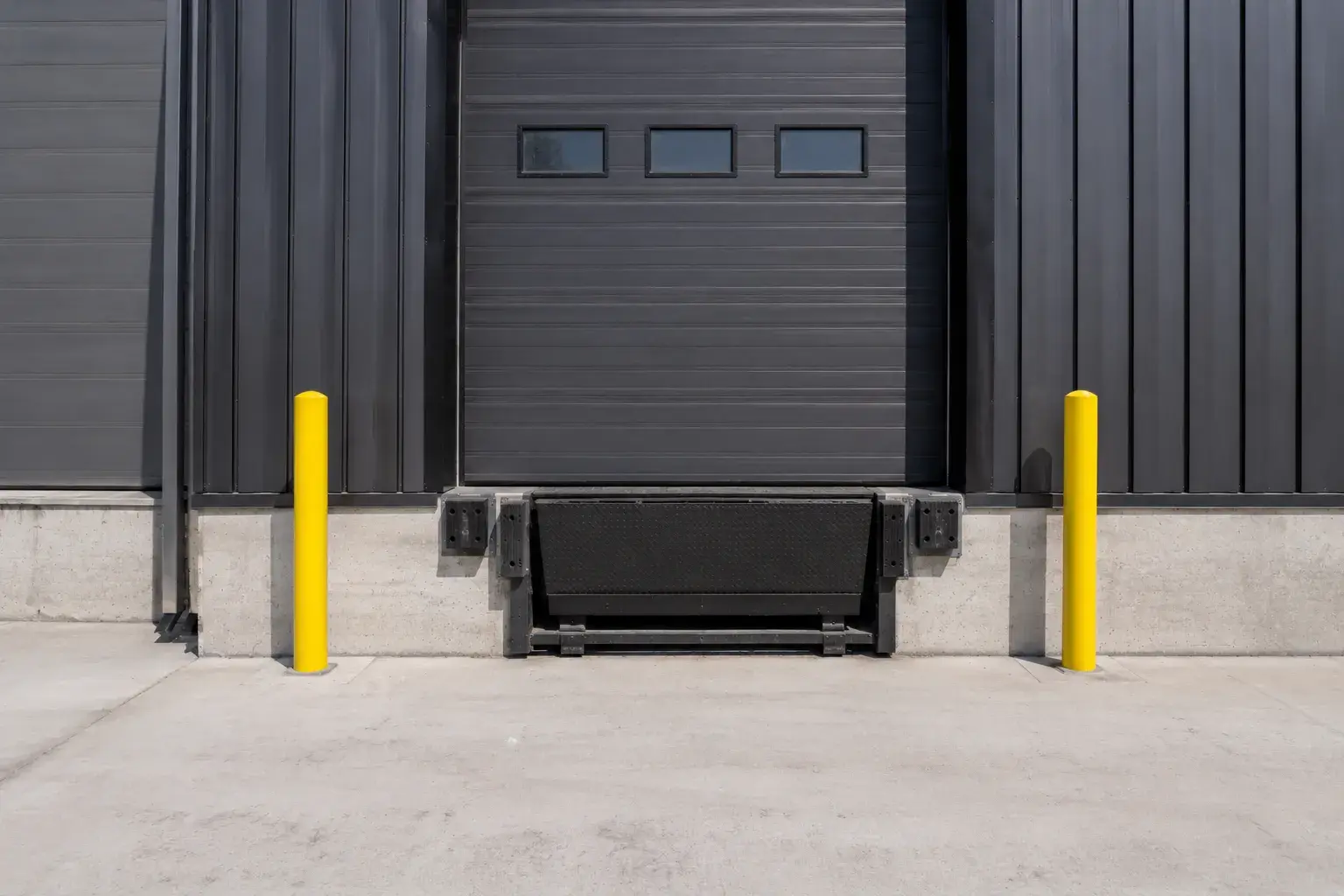
- Loading docks and warehouses: shielding dock equipment, corners, and racking from forklifts and trucks.
- Equipment and utility protection: guarding electrical panels, gas meters, transformers, HVAC units, and fuel dispensers.
- Traffic control: defining lanes, drive throughs, and no entry points in parking lots and municipal spaces.
Spacing and Height Guidance
Bollard height and spacing depend on the job. As general guidance:
- Height: most protective bollards stand roughly 36 to 42 inches (900 to 1070 mm) above grade, tall enough to be visible to drivers and to engage a vehicle bumper.
- Spacing for pedestrians: to block vehicles while allowing people, wheelchairs, and strollers through, posts are commonly set about 3 to 5 feet (roughly 900 to 1500 mm) apart on centre. Keep clear openings wide enough for accessibility.
- Spacing for equipment protection: set posts close enough that a vehicle cannot pass or wedge between them and reach the asset behind.
These are starting points. Final spacing should reflect local accessibility requirements, the specific asset being protected, and, for security applications, the engineered design.
Embedment and Footing Basics
For embedded bollards, the footing does the real work. A protective bollard is typically set into a concrete footing that extends below the local frost line, which in the GTA means going deep enough to avoid frost heave. The post is set plumb, the footing is sized to the expected load, and concrete fill inside the pipe adds mass. Deeper embedment and a larger footing resist more force.
Surface mounted bollards skip the footing and rely on anchor bolts into an existing slab, which is quicker but suits lighter duty only. And again, for crash-rated performance, the foundation is part of the certified engineered design and is not a general rule of thumb.
Bollard Types Compared
| Type | Best Use | Access | Protection Level |
|---|---|---|---|
| Fixed embedded | Permanent protection, building corners, equipment | None (permanent) | Moderate to high, depending on footing |
| Surface mounted | Light duty guidance on existing slabs | None (semi permanent) | Low to moderate |
| Removable | Fire lanes, service drives, occasional access | Manual lift out | Low (access control, not impact) |
| Retractable | Frequent controlled access, plazas, courtyards | Manual or automatic | Low to moderate |
| Crash rated | Anti-ram security, entrances, critical sites | None or engineered gate | High (certified, engineered only) |
How to Choose
Start with the threat and the access pattern. If you never need vehicles through, a fixed bollard is simplest and strongest. If you need occasional access, go removable. If you need frequent controlled access, consider retractable. If you face a real vehicle attack or runaway vehicle risk, you need a certified, engineered crash-rated system, and the specification should come before anything is fabricated. Then match material and finish to the environment and the look you want. Our metal fabrication services cover custom bollards from simple protective posts through architectural installations, and you can see examples of our work on our projects page.
Frequently Asked Questions
How deep should a bollard be set?
For embedded protective bollards, the concrete footing should extend below the local frost line to prevent heave, which in the GTA means a substantial depth. Deeper embedment and a larger footing resist more impact. Surface mounted bollards use anchor bolts into an existing slab instead and are suited to lighter duty. For crash-rated bollards, the foundation is part of the certified engineered design.
Can any bollard stop a car?
No. Only bollards tested and certified to a recognized crash standard, such as ASTM F2656 / F3016, are rated to stop a moving vehicle, and that rating depends on the full engineered system of post, foundation, and layout. A standard protective or removable bollard offers guidance and everyday protection but is not an anti-ram barrier.
What is the best finish for outdoor bollards in Ontario?
For exterior use we generally recommend hot dip galvanizing, often with a powder coat over it. Road salt and freeze thaw cycles are hard on bare steel, and galvanizing gives long term corrosion protection while powder coat adds colour and a durable outer layer. Stainless steel is another good option where appearance is a priority.
How far apart should bollards be spaced?
To block vehicles while letting people through, posts are commonly set about 3 to 5 feet on centre, with clear openings kept wide enough for accessibility. For equipment protection, set them close enough that a vehicle cannot pass between them and reach the asset. Final spacing should reflect local accessibility requirements and, for security work, the engineered design.
Need bollards fabricated for a storefront, loading dock, municipal project, or industrial site across the GTA and Ontario? The Grate Guys is a licensed, insured, WSIB-covered custom metal fabrication shop, and we build bollards and architectural metalwork to spec. Contact us to discuss your project and get a quote.
Get a quote for your project
Send sizes, quantities, and your deadline. We review it and reply with the next step.