
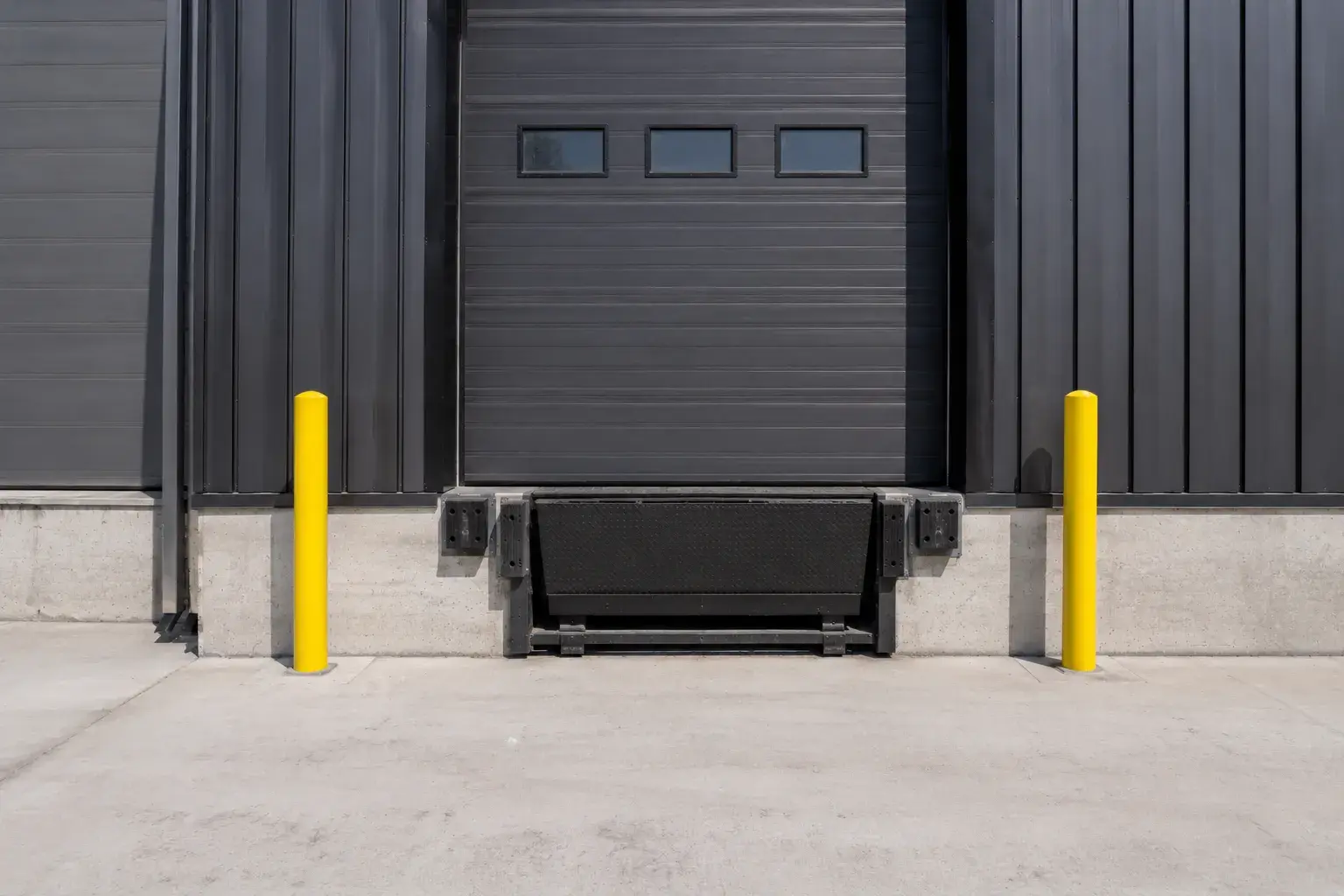
Forklift Protection: Rack Guards, Bollards, and Impact Barriers
How to protect a warehouse from forklift impacts: rack guards, bollards, guard rails, and impact barriers, where each goes, and how to spec for real forklift loads.
Warehouses protect against forklift damage by layering steel guards at every point where a truck can strike something valuable: rack end-of-aisle guards and upright protectors on the racking, bollards on corners and around equipment, and guard rail or impact barriers along the lines that separate pedestrians from moving trucks. The right protection depends on where the impact happens and how heavy and fast the forklift is, so each guard should be sized and anchored for the actual loads in your facility, not bought off a generic spec.
Below is how each type of protection works, where it goes, what it protects, and how to spec it so it actually holds up on the floor.
The Real Cost of a Forklift Impact
A loaded forklift can weigh 8,000 to 12,000 lb or more, and it does not stop quickly. When it clips a rack upright, hits a wall, or strikes a person, the damage is rarely cosmetic. A single bent upright can compromise an entire bay of loaded racking, and a rack collapse is one of the most dangerous events that can happen in a warehouse.
The costs fall into three buckets:
- Racking. A struck upright loses load capacity even when it still looks standing. Replacing an upright means unloading the bay, and in a full building that can mean days of disruption.
- The building. Damaged dock walls, columns, overhead door tracks, and man doors add up fast, and column damage can raise structural questions.
- People. Forklift strikes on pedestrians are among the most serious incidents in any facility. Physical separation is the control that does not depend on anyone paying attention.
Steel protection is cheap next to any one of these. The point of a guard is to take the hit so the rack, wall, or worker does not.
Rack End-of-Aisle Guards and Upright Protectors
Racking takes more forklift abuse than anything else in a warehouse, because trucks are turning into and backing out of aisles all day. Two guards handle most of it.
End-of-Aisle Guards
These are heavy steel guards that sit at the ends of aisles, where a forklift entering or exiting is most likely to swing wide and clip the first upright. A good end-of-aisle guard is a formed or welded steel unit, floor-anchored, and set slightly proud of the rack so it absorbs the hit and deflects the truck away from the frame.
Upright and Frame Protectors
Upright protectors wrap or sit in front of the individual rack legs down the aisle. They come as bolt-on steel guards, welded post guards, and formed wrap-around styles. The goal is to keep a glancing blow from bending the leg at floor level, which is where uprights fail.
When speccing rack protection, match the guard height and gauge to your truck. A guard that stops a walkie stacker is not the same as one built for a loaded counterbalance truck. The guard also has to be anchored so the impact transfers into the slab rather than tearing the guard loose.
Bollards for Equipment and Corners
Bollards are vertical steel posts, typically pipe filled with concrete or heavy-wall structural tube, anchored into the floor. They are the workhorse of forklift protection because they can go almost anywhere and take a direct hit.
Use bollards to protect:
- Building corners and the ends of racking runs
- Electrical panels, transformers, and gas meters
- Compressors, HVAC units, battery charging stations, and eyewash stations
- Fire equipment, sprinkler risers, and control panels
- The corners of offices, mezzanine stairs, and pedestrian entries
Bollards can be surface-mounted on a baseplate with anchors or set in a cored or poured footing. Embedded and concrete-filled bollards take a harder hit than a bolt-down baseplate on a thin slab, so the mounting method should be chosen for the truck weight and the slab you actually have. See our bollards page for the styles we fabricate. For a full breakdown of every protection type and how they fit together, our services overview shows what we build in-house.
Guard Rail and Impact Barriers: Separating People From Traffic
The single most important protection in any warehouse is keeping people out of the path of moving trucks. Guard rail and impact barriers create a physical line that a forklift cannot easily cross.
Common applications:
- Pedestrian walkways. Rail along the edge of a marked walkway so a drifting truck is stopped by steel, not paint.
- Machinery and work cells. Barriers around production equipment, packaging lines, and operator stations.
- Dock and staging areas. Rail to keep trucks out of pick faces, offices, and break areas.
- Racking runs. A rail line in front of the bottom of the rack where trucks pass in a main lane.
Impact barriers range from bolt-down steel guard rail on posts to heavy welded barrier systems. The heavier the traffic and the faster the trucks, the more substantial the barrier and its anchoring need to be. A barrier is only as strong as the connection to the slab, so post spacing, base size, and anchor selection all have to suit the load it is meant to stop.
Column and Door Protection
Structural columns and overhead doors sit in high-traffic zones and are expensive to fix. Column guards wrap the base of a building column in steel so a strike hits the guard, not the structure. They come as bolt-on wrap guards, welded post guards set around the column, and rubber-faced steel guards for lighter contact.
Overhead doors and their tracks are magnets for damage at dock positions. Track guards, bollards flanking the door opening, and rail along the approach keep trucks from destroying door hardware and tearing tracks off the wall. Man doors and the corners of offices benefit from a bollard or short rail as well.
Protection Type Comparison
| Protection Type | Where It Goes | What It Protects |
|---|---|---|
| End-of-aisle guard | Ends of rack aisles | First upright at the aisle mouth |
| Upright / frame protector | Individual rack legs down the aisle | Rack uprights at floor level |
| Bollard | Corners, equipment, panels, doors | Fixed equipment and building corners |
| Guard rail / impact barrier | Walkways, work cells, lane edges | Pedestrians and machinery |
| Column guard | Base of structural columns | Building structure |
| Door / track guard | Overhead door openings and approaches | Door hardware and tracks |
How to Spec Forklift Protection
Buying a guard is easy. Buying one that actually stops your trucks takes a few real inputs. Before anything gets fabricated, work through these.
Map the Traffic Patterns
Walk the floor and note where trucks turn, back up, and pass close to people or equipment. Impacts cluster at aisle ends, corners, dock doors, and pinch points. Protect those first. Existing scuffs, bent steel, and gouges in the slab tell you exactly where trucks are hitting.
Know the Forklift Weight and Speed
Impact force comes from the mass of the loaded truck and how fast it is moving. A 3,000 lb walkie and a 12,000 lb loaded counterbalance truck are not the same problem. Get the loaded weight of your heaviest trucks and a realistic travel speed for the area, because those numbers drive the gauge, the post size, and the anchoring for every guard. Any impact rating on a barrier should be engineered for the loads it will actually see, not assumed from a catalog.
Anchor to the Slab, Not Just the Floor
A guard is only as good as its connection to the concrete. Key factors:
- Slab thickness and condition. A thin or cracked slab limits anchor capacity, and a heavy bollard may need a poured footing instead of surface anchors.
- Anchor type and embedment. Anchor size, depth, and edge distance all affect how much load the connection holds.
- Base and post design. The baseplate and post have to transfer the impact into those anchors without folding.
For a heavy or high-consequence installation, the anchoring and impact rating should be engineered for your specific loads and slab. We fabricate to suit the real conditions rather than a one-size spec. Heavy-duty steel elements like our heavy-duty grates and guards are built for industrial traffic, and you can see examples of installed protection and custom metalwork in our projects gallery.
FAQ
What is the best way to protect warehouse racking from forklifts?
Combine end-of-aisle guards at the mouth of each aisle with upright protectors on the individual rack legs, sized and anchored for your heaviest loaded truck. End-of-aisle guards catch the wide swings, and upright protectors stop the glancing blows down the aisle that bend legs at floor level.
How much weight can a forklift bollard stop?
It depends on the bollard construction, the mounting method, and the slab. A concrete-filled or embedded bollard on a sound slab takes a far harder hit than a bolt-down baseplate on thin concrete. There is no single number, which is why the bollard and its anchoring should be engineered for your actual forklift weight and speed.
Do I need guard rail if I already have painted floor lines?
Painted lines mark where people should walk, but they stop nothing. Guard rail and impact barriers physically stop a drifting or out-of-control truck from entering a pedestrian area. Where trucks and people share space, steel separation is the control you want.
Can protection be custom-fabricated for an existing warehouse?
Yes. Every warehouse has its own aisle widths, column spacing, equipment layout, and slab condition. Custom fabrication lets you fit guards to the exact locations that get hit and anchor them to the slab you actually have, rather than forcing a stock product to fit.
The Grate Guys fabricate forklift protection barriers, rack guards, bollards, and custom industrial metalwork for warehouses and facilities across the GTA and Ontario. We are licensed, insured, and WSIB-covered, and we build to suit your real traffic and loads. Contact us to walk your floor and spec the right protection for your facility.
Get a quote for your project
Send sizes, quantities, and your deadline. We review it and reply with the next step.