
Does Custom Metal Fabrication Need an Engineer's Stamp in Ontario?
When custom metal fabrication needs a professional engineer's stamp in Ontario: load-bearing and structural work, guards and stairs, versus non-structural parts, and how the process works.
In Ontario, custom metal fabrication needs a professional engineer's stamp when the part is load-bearing or structural, such as mezzanines, platforms, stairs, guards, lintels, and equipment supports that carry building or safety loads, or when the building permit, specification, or authority having jurisdiction requires it. Non-structural items like light brackets, decorative screens, covers, and many drop-in grates usually do not need a stamp. When in doubt, the safe answer is to ask up front, because building a load-bearing part without the required engineering can fail inspection and has to be redone.
A fabricator builds to a design. For load-bearing and safety-critical work, that design has to be sized and signed off by a licensed professional engineer (a P.Eng. in Ontario) before it is built and inspected. This guide explains what typically needs a stamp, what usually does not, and how the workflow fits together so your project is not held up at inspection.
What an engineer's stamp actually means
A professional engineer's stamp (the P.Eng. seal) on a drawing means a licensed engineer has taken responsibility for the design: that the member sizes, connections, and details are adequate for the specified loads and meet the applicable code. In Ontario, engineering work is regulated, and structural design of load-bearing assemblies is engineering work. A fabricator is skilled at building to a design, but building is not the same as taking professional responsibility for whether the design is safe. That is the engineer's role.
The stamp is not a formality. It is what a building official relies on at plan review and inspection, and it is what protects everyone if a guard, stair, or platform ever has to carry the load it was designed for.
Work that typically needs a stamp
If the part carries building loads, people, or equipment, it is usually engineered. Common examples:
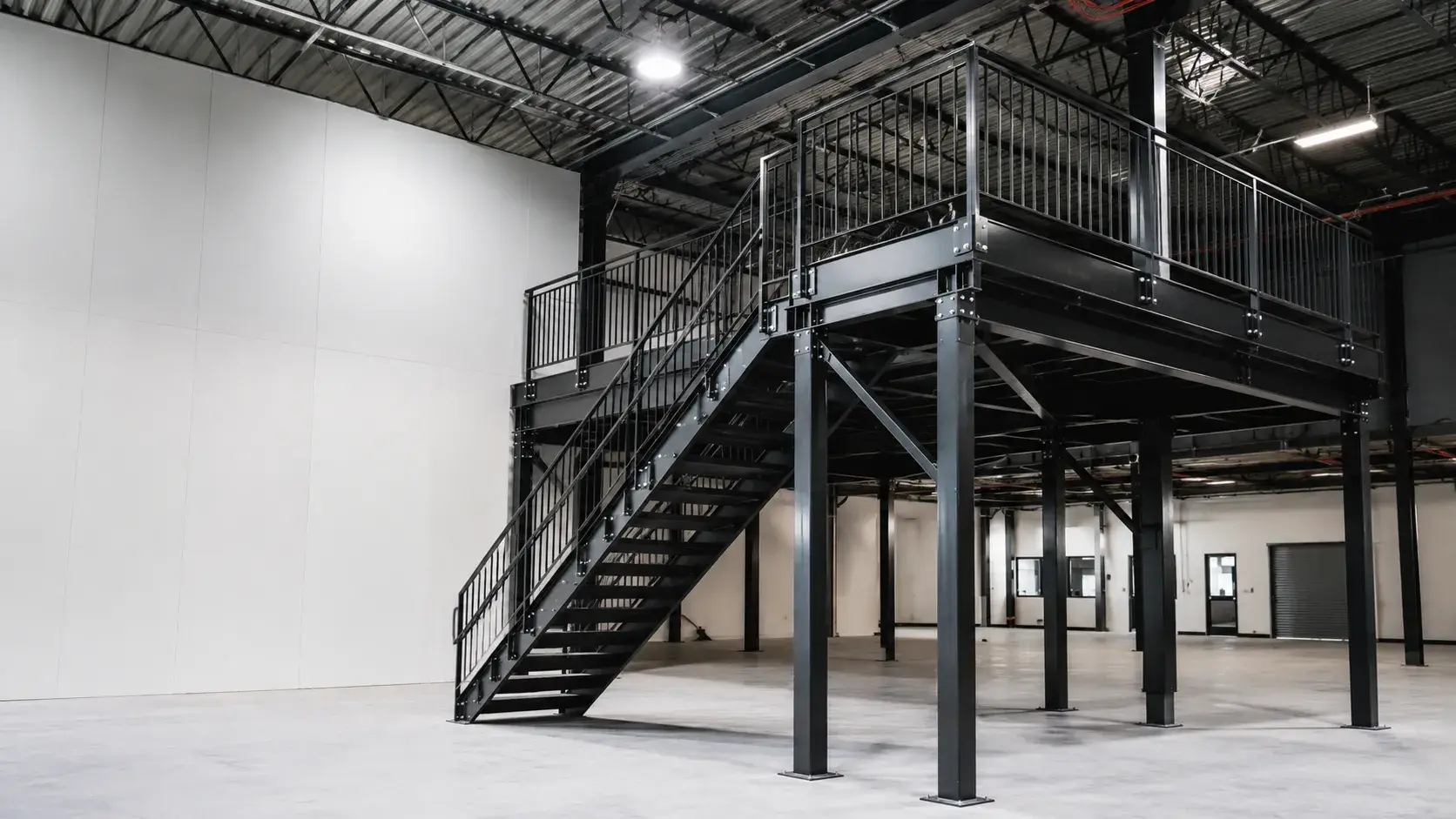
- Mezzanines and equipment platforms: They carry dead load, live load, and everything placed on them. Always engineered, and usually part of a permit. See our platforms and mezzanines spec guide.
- Structural stairs: Stringers, treads, and landings that carry occupant loads. Egress stairs in particular are code-governed and engineered. Our stairs and railings code guide covers the requirements.
- Guards and guardrails: Guards must resist specified loads under the Ontario Building Code, so guard systems on elevated areas are commonly designed and stamped.
- Lintels and shelf angles: Steel that spans an opening and carries wall load above must be sized by an engineer or the governing code.
- Load-bearing supports and dunnage: Frames carrying rooftop units, tanks, or heavy equipment, especially where wind, seismic, or heavy dead loads apply.
- Anything tied to a building permit or spec: If the permit drawings, the project specification, or the authority having jurisdiction call for stamped shop drawings or a stamped design, it needs a stamp regardless of the part.
Work that usually does not need a stamp
Non-structural parts that do not carry building or safety loads generally do not require engineering. Common examples:
- Light brackets and mounting plates for signage, small equipment, or trim, where failure is not a structural or life-safety event.
- Decorative and architectural screens that are not load-bearing, subject to wind-load review where they are large or exposed.
- Covers, plates, and many drop-in grates that seat in an existing frame and carry only their rated traffic, selected by load class rather than custom-engineered.
- Bollards in many applications, unless a specific crash rating or engineered foundation is required.
- Non-structural handrails that are not acting as a required guard, though these still benefit from meeting graspability and mounting requirements.
The line is not always obvious, which is exactly why it is worth confirming before fabrication rather than after.
Quick guide: stamp or no stamp
| Item | Typically needs a P.Eng. stamp? |
|---|---|
| Mezzanine or work platform | Yes |
| Egress or structural stair | Yes |
| Guard or guardrail on an elevated area | Usually |
| Lintel or shelf angle carrying wall load | Yes |
| Rooftop or heavy equipment support | Usually |
| Light bracket or mounting plate | No |
| Decorative non-structural screen | No (check wind load) |
| Drop-in grate selected by load class | No |
| Anything the permit or spec requires stamped | Yes |
How the workflow fits together
For a stamped part, the sequence usually runs like this: the design is engineered and stamped, shop drawings are prepared and submitted (sometimes also stamped or reviewed), the fabricator builds to the approved drawings, and the installed work is inspected against them. The engineering and drawing steps take time, so factor them into your schedule. Our guides on reading shop drawings and fabrication lead times explain how the submittal and schedule work.
If you already have a stamped design from your engineer, a fabricator can build directly to it. If you are not sure whether your part needs engineering, say so at the quote stage. A good shop will flag load-bearing and code-driven work and point you to the right professional engineering before anything is built, so you do not lose time or money at inspection.
Who arranges the engineer?
It depends on the project. On many jobs the design comes from the project's own structural engineer or the drawings the general contractor provides, and the fabricator builds to that. On smaller or one-off items, the fabricator can often coordinate the required engineering so you get a buildable, stamped design in one place. Either way, the fabricator does not replace the engineer; the two roles work together. You can see the range of structural and custom work we handle on our structural steel fabrication and custom metal fabrication pages.
Frequently asked questions
Does every custom metal part need an engineer's stamp?
No. Only load-bearing and structural parts, or parts the permit or specification requires, need a professional engineer's stamp in Ontario. Non-structural items like light brackets, covers, decorative screens, and load-class-rated drop-in grates usually do not. When it is unclear, confirm before fabrication.
Who provides the engineering, the fabricator or me?
Often the project's structural engineer or the contractor's drawings supply the stamped design, and the fabricator builds to it. On smaller or standalone items, a fabricator can frequently coordinate the required engineering so you receive a buildable, stamped design. The fabricator builds to the design but does not take the engineer's professional responsibility.
What happens if I build a structural part without the required stamp?
It can fail inspection and have to be redesigned, re-engineered, and in some cases rebuilt, which costs far more time and money than doing it right the first time. For guards, stairs, and platforms, it is also a genuine safety issue. Confirming the requirement up front avoids all of this.
Do guards and railings need to be engineered?
Guards that protect an elevated area must resist specified loads under the Ontario Building Code and are commonly designed and stamped. A simple non-structural handrail that is not acting as a required guard often does not need a stamp, though it should still meet graspability and mounting requirements. Check the specific application.
Not sure whether your part needs an engineer's stamp? Contact The Grate Guys and we will flag it before we build. We are a licensed, insured, and WSIB covered metal fabrication shop in Toronto serving contractors, property managers, developers, and facility managers across the GTA and Ontario.
Get a quote for your project
Send sizes, quantities, and your deadline. We review it and reply with the next step.